2026 AERA ANNUAL BROWN LECTURE IN EDUCATION RESEARCH
Thursday, November 5, 2026
6:00 p.m. ET | Virtual Livestream
Join AERA for the 2026 Annual Brown Lecture in Education Research, featuring Daniel Solórzano, professor of social science and comparative education and Chicana/o and Central American studies at the University of California, Los Angeles, and director of UCLA’s Center for Critical Race Studies in Education.
The lecture will be presented before a small, invited in-person audience and livestreamed for the public.
|
WELCOME
Tabbye M. Chavous
American Educational Research Association
INTRODUCTION OF THE SPEAKER
Jerome E. Morris
University of Missouri-St. Louis
SPEAKER
Daniel Solórzano
University of California, Los Angeles
DISCUSSION FORUM
Daniel Solórzano
University of California,
Los Angeles |
Lia Epperson
American University
|
|
Jessie Brown
American Council
on Education
|
Erin Dunlop Velez
Institute for Higher
Education Policy
|
CLOSING
Tabbye M. Chavous
American Educational Research Association
|
ABOUT THE LECTURE
Admitted but Not Equal: What George McLaurin’s Story Tells Us About Race, Racism, and Education in 1948 and Today
What does it mean to be admitted to a university but still denied the opportunity to attend as an equal?
In the 2026 Brown Lecture, Daniel G. Solórzano examines that question through the story of George W. McLaurin, an educator who, at 54 years old, became the first Black student admitted to the University of Oklahoma in 1948. Although McLaurin was permitted to enroll in its doctoral program in educational administration, the university segregated him from his white classmates—in the classroom, library, cafeteria, and other spaces across campus.
Drawing on archival research and the scholarship of pioneering legal scholar Derrick Bell, Solórzano explores McLaurin’s challenge to the university’s treatment of him, culminating in the landmark 1950 Supreme Court case McLaurin v. Oklahoma State Regents. He recovers McLaurin’s fuller story as an educator, husband, and father and considers what his experience—and the decision that helped lay the groundwork for Brown v. Board of Education—reveals about the difference between gaining access to an institution and attending as an equal.
At a time when questions about racial inequality and equal opportunity remain deeply contested, the lecture assesses how patterns of exclusion can persist within educational institutions even after formal legal barriers have been removed—and what McLaurin’s legacy asks of researchers, educators, and policymakers today.
|
ABOUT THE SPEAKER
|
 |
Daniel Solórzano is Professor of Social Science and Comparative Education and Chicana/o and Central American Studies and the Director of the Center for Critical Race Studies in Education at the University of California, Los Angeles. Dr. Solórzano is known for his work in critical race theory in education, racial microaggressions, racial microaffirmations, and critical race spatial analysis. He has authored more than 100 research articles, book chapters, and books on issues related to educational access and equity and underrepresented student populations.
He is co-author of Racial Microaggressions: Using Critical Race Theory to Respond to Everyday Racism (Teachers College Press) and co-editor of The Chicana/o Education Pipeline: History, Institutional Critique, and Resistance (UCLA Chicano Studies Research Center Press). Dr. Solórzano was elected an AERA Fellow in 2014 and is a past member of AERA Council (2022–2025). He is recipient of AERA’s Social Justice in Education Award. He has also received the UCLA Distinguished Teaching Award and the Critical Race Studies in Education Association’s Derrick A. Bell Legacy Award. In 2020, he was elected as a member of the National Academy of Education. |
|
ABOUT THE MODERATOR AND COMMENTATORS
|
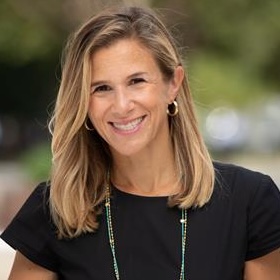 |
Jessie Brown is executive vice president at the American Council on Education (ACE), where she leads strategic and external engagement initiatives and oversees communications and public affairs, advancement and membership, research, Carnegie Classifications, and the Office of the President. Previously, she served as deputy chief executive officer and executive director of legal resources at the National Association of College and University Attorneys and national senior director of legal affairs at Year Up, a workforce development organization. From 2015 to 2017, Brown served as senior counsel in the Office for Civil Rights at the U.S. Department of Education, working on equity and anti-discrimination initiatives. She also previously served as associate general counsel at ACE. Brown earned her JD from Harvard Law School and her BA in political science and Hispanic studies, magna cum laude, from Brown University. |
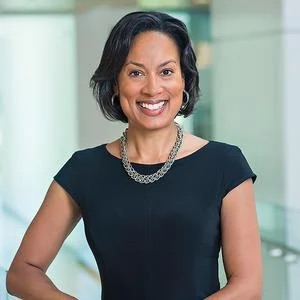 |
Lia Epperson is professor of law at American University Washington College of Law and a nationally recognized expert in constitutional law, civil rights, and education policy. Her scholarship examines the relationship between federal courts and the political branches and its implications for educational equity. Previously, she directed the education law and policy group at the NAACP Legal Defense Fund, where she litigated education cases and advocated for civil rights protections. Epperson has also served as senior associate dean for faculty and academic affairs at American University, the inaugural Microsoft Technology and Racial Equity Fellow at Howard University School of Law, and a senior fellow at the Center for American Progress. She previously held faculty positions at the University of Maryland and Santa Clara University. Epperson earned her JD from Stanford University, where she was an NAACP Legal Defense Fund Scholar, and her BA, magna cum laude, from Harvard University. |
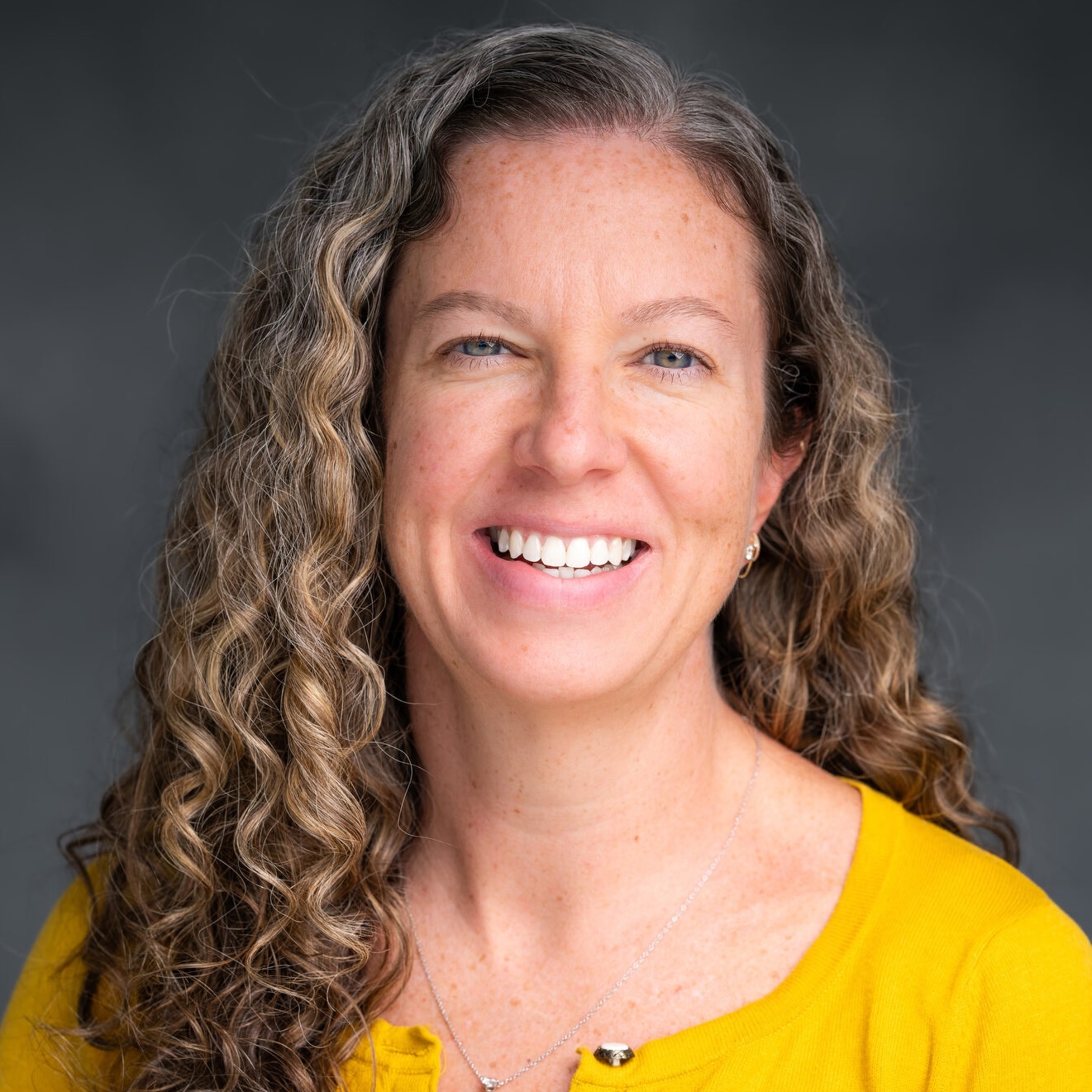 |
Erin Dunlop Velez is vice president of research at the Institute for Higher Education Policy (IHEP), where she leads research supporting the organization's policy priorities, including data and transparency, strong outcomes for all students, evidence-based completion, need-based aid, and equitable admissions. Her research focuses on college access, financial aid policy, and the labor market returns to postsecondary credentials. Previously, Velez served as director of education research at RTI International, where she led major federal research projects, including the Digest of Education Statistics, The Condition of Education, and the Baccalaureate and Beyond Longitudinal Study. She also conducted research for nonprofit and foundation clients and held leadership roles at RTI. Earlier in her career, she was a researcher at the American Institutes for Research. Velez earned her MA and PhD in economics from the University of Virginia and her BA in economics from the College of William & Mary. |
|
ABOUT AERA LEADERSHIP
|
 |
Tabbye M. Chavous is executive director of the American Educational Research Association. A nationally recognized scholar and seasoned leader, Chavous brings over 25 years of experience and significant accomplishments in research, teaching, and organizational advancement. Across her career, she has consistently advocated for high-quality, inclusive research, and her equity-oriented leadership is evident in her approaches to building and transforming educational environments. Chavous has dedicated her career to educational equity, advancing strengths-based frameworks for studying the experiences of marginalized communities and working with educational systems to draw on this knowledge in ways that serve all students. |
 |
AERA 2026-2027 President Jerome Morris is the the E. Desmond Lee Endowed Professor of Urban Education at the University of Missouri–St. Louis. A former middle school teacher and founder of a rites of passage program, Morris’s conceptual frameworks emphasize the need for authentic partnerships with historically marginalized people and low-resource communities and schools.
Morris’s nearly three-decade career includes serving as a tenured professor at the University of Georgia (UGA) and a Fellow at UGA’s Institute for Behavioral Research. He has authored the books Central City’s Joy and Pain: Solidarity, Survival, and Soul in a Birmingham Housing Project (University of Georgia Press) and Troubling the Waters: Fulfilling the Promise of Quality Public Schooling for Black Children (Teachers College Press) and has published in leading research journals such as the American Educational Research Journal, Educational Researcher, Review of Research in Education, and Teachers College Record. Highly engaged with AERA since 1995, Morris was inducted as an AERA Fellow in 2022, elected Division G’s vice-president for 2020–2023, elected to AERA’s Executive Board, and served as Council liaison to AERA’s Journal Publications Committee. |
|
WITH SPECIAL THANKS TO THE SUPPORTERS AND FRIENDS OF THE BROWN LECTURE
|
2026 Supporters of the Brown Lecture
|
|
Sage
|
2026 Friends of the Brown Lecture
|
|
American Association of Colleges for Teacher Education (AACTE)
American Political Science Association
American Sociological Association
American Statistical Association
College of Education and Human Sciences at the University of Nebraska-Lincoln
College of Education and Human Sciences, University of New Mexico
Dr. Joseph Wyeth Fenwick, III and Mrs. Faye Ward Fenwick*
Illinois State University College of Education
Learning Policy Institute
Loyola Marymount University, School of Education
Michigan State University, College of Education
Morgan State University School of Education and Urban Studies
*Recurring annual gift
|
Penn State College of Education
Southern Education Foundation
Stanford University
TCU College of Education
University Council for Educational Administration (UCEA)
University of Illinois Urbana-Champaign
University of Iowa College of Education
University of Maryland College of Education
University of Massachusetts, Amherst
University of Pittsburgh School of Education
University of San Diego, School of Leadership and Education Sciences (SOLES)
University of Virginia School of Education and Human Development
University of Wisconsin-Madison School of Education
Wayne State University, College of Education
|
|
ABOUT THE ANNUAL BROWN LECTURE IN EDUCATION RESEARCH
The Annual Brown Lecture in Education Research illuminates the important role of research in advancing understanding of equality and equity in education. The Lectureship was inaugurated in 2004 to commemorate the 50th anniversary of the landmark Brown v. Board of Education decision, in which the U.S. Supreme Court took scientific research into account. Each year a distinguished scholar notable for producing significant research related to equality in education is invited to give this public lecture in Washington, D.C.
ABOUT AERA
The American Educational Research Association (AERA) is the largest national interdisciplinary research association devoted to the scientific study of education and learning. Founded in 1916, AERA advances knowledge about education, encourages scholarly inquiry related to education, and promotes the use of research to improve education and serve the public good. With members from 96 countries, AERA is committed to expanding its connections to the global research community, and is actively involved in advancing the field of education research worldwide.
|
2026 BROWN LECTURE SELECTION COMMITTEE
Jerome Morris • Maisha T. Winn • Tabbye Chavous • Denise M. Taliaferro Baszile • Ruth María López • Rand Quinn • George L. Wimberly
PREVIOUS LECTURERS
Learn more about past lectures
2025 - James A. Banks, University of Washington
2024 - Elise Boddie, University of Michigan
2023 - Leslie T. Fenwick, Howard University and AACTE
2022 - John Diamond, Brown University
2021 - Lori Patton Davis, The Ohio State University
2020 - William F. Tate IV, University of South Carolina
2019 - Prudence L. Carter, University of California, Berkley
2018 - H. Richard Milner IV, Vanderbilt University
2017 - Alfredo J. Artiles, Arizona State University
2016 - Marta Tienda, Princeton University
2015 - Teresa L. McCarty, University of California, Los Angeles
2014 - James D. Anderson, University of Illinois at Urbana-Champaign
2013 - Gary Orfield, University of California, Los Angeles
2012 - Vanessa Siddle Walker, Emory University
2011 - Gloria J. Ladson-Billings, University of Wisconsin, Madison
2010 - Kenji Hakuta, Stanford University
2009 - Luis C. Moll, University of Arizona
2008 - Stephen W. Raudenbush, University of Chicago
2007 - Margaret Beale Spencer, University of Chicago
2006 - Linda Darling-Hammond, Stanford University
2005 - Claude M. Steele, Stanford University
2004 - Edmund W. Gordon, Teachers College, Columbia University
|
|